

 ₹https://showrooms.obenelectric.com/electric-bikes/alwar/govind-nagar/oben-electric-bike-showroom-in-govind-nagar-alwar--tJXKMf/articles/why-electric-bikes-are-becoming-the-smart-choice-d--2b88633c-d12c-4035-b8d7-e8c5c3f7c084
Oben Electric Bike Showroom, Govind Nagar, alwar
Electric Bikes Showrooms in Govind Nagar, Alwar, Rajasthan
Shop No 12/13, Kaptan Tower, Delhi Road, Opposite Jhanakar Hotel, Govind Nagar, alwar, rajasthan - 301001
Book Now
Oben Electric Bike Showroom Social Feeds in Govind Nagar, alwar
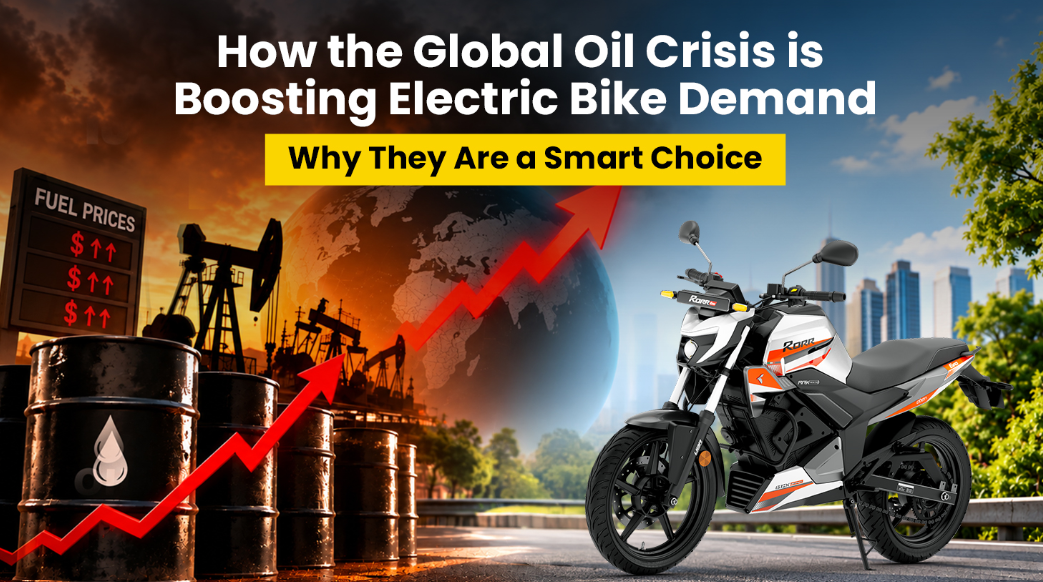
Why Electric Bikes Are Becoming the Smart Choice During the Global Oil Crisis
India's dependence on imported crude oil makes petrol prices vulnerable to changes in global oil markets. When international conflicts disrupt oil supplies or create uncertainty around major shipping routes, the effects can reach Indian fuel stations and affect everyday commuters.
For people who rely on motorcycles for daily travel, rising petrol costs make the running cost of a vehicle an important consideration. Electric bikes offer an alternative to petrol-powered motorcycles, helping riders reduce their direct dependence on petrol while making daily travel costs more predictable.
The growing interest in electric mobility is also driven by other factors, including maintenance requirements, battery technology, charging access and environmental considerations. As India expands its electric vehicle ecosystem, electric motorcycles are becoming an option worth considering for commuters who want to understand their long-term transportation costs.
This blog explores the practical benefits of electric bikes during periods of oil price volatility, including running costs, maintenance, energy independence, charging infrastructure and environmental impact.
Why Are Electric Bikes a Practical Alternative to Rising Fuel Costs?
One of the main differences between electric and petrol motorcycles is the cost of energy required to travel. Petrol motorcycle owners pay for fuel based on petrol prices and their vehicle's mileage. Electric motorcycle owners pay for the electricity used to charge their batteries.
Consider a hypothetical comparison between a petrol motorcycle delivering 40 km per litre and an electric motorcycle with an electricity cost of ₹0.25 per kilometre. At a petrol price of ₹110 per litre, the petrol motorcycle's fuel cost would be ₹2.75 per kilometre.
For a daily commute of 40 km over 30 days, the estimated costs would be:
Petrol motorcycle: ₹110 per day and ₹3,300 per month.
Electric motorcycle: ₹10 per day and ₹300 per month.
Estimated monthly difference: ₹3,000.
Estimated annual difference: ₹36,000.
These figures are illustrative calculations, not guaranteed savings or a verified comparison of specific Oben Electric and petrol motorcycle models. Actual costs depend on petrol prices, electricity tariffs, vehicle efficiency, charging losses and riding conditions.
The purchase price, financing, insurance, servicing and other ownership expenses must also be considered when comparing the overall cost of an electric motorcycle with a petrol motorcycle.
Electric Motorcycle Maintenance and Ownership Costs
Electric motorcycles have a different mechanical design from petrol-powered motorcycles. They do not require engine oil changes, spark plug replacements or other engine-related maintenance associated with petrol engines.
However, electric motorcycles still require routine inspections and maintenance. Tyres, brakes, suspension, electrical components and battery-related systems may need attention depending on the model and usage.
The service schedule and cost depend on the motorcycle manufacturer, model and maintenance requirements. Before purchasing an electric motorcycle, review its recommended service intervals and understand the costs involved.
For riders comparing electric and petrol motorcycles, running costs and scheduled maintenance are useful factors to evaluate alongside purchase price, riding range and charging convenience.
More Predictable Energy Costs
Petrol prices can change with international crude oil prices, supply conditions, taxes and other market factors. Electric motorcycle charging costs depend on local electricity tariffs, charging efficiency and usage.
Electricity prices can also change, so charging costs are not guaranteed to remain constant. However, charging at home may help riders estimate their everyday energy expenses more easily than relying entirely on petrol purchased at changing retail prices.
For daily commuters, this difference is worth considering when choosing a motorcycle for regular travel.
How Electric Bikes Help Reduce Dependence on Imported Fossil Fuels
India's dependence on imported crude oil makes the economy vulnerable to changes in international oil prices. Since petrol motorcycles rely on refined petroleum products, their running costs are directly affected by changes in petrol prices.
Electric motorcycles offer another way to travel. By replacing some petrol-powered journeys with electric travel, riders can reduce petrol consumption and contribute to lower demand for imported oil.
India's transition to electric mobility also creates opportunities to develop domestic battery technology, electric motors, charging solutions and vehicle manufacturing capabilities.
Environmental Benefits of Electric Motorcycles
Petrol motorcycles release carbon dioxide and other pollutants through their exhaust systems. Electric motorcycles produce zero tailpipe emissions while riding, which can help reduce exhaust pollution in areas where they replace petrol-powered vehicles.
However, electric motorcycles are not entirely emission-free across their lifecycle. Their overall environmental impact depends on factors such as electricity generation, battery manufacturing, vehicle production and battery recycling.
The environmental benefits of electric mobility can increase as the electricity grid incorporates more renewable energy.
For commuters, switching to an electric motorcycle can offer a practical way to reduce direct exhaust emissions without giving up the convenience of two-wheeler travel.
Economic Benefits of Electric Mobility
India spends substantial amounts on crude oil imports to meet its energy requirements. Reducing petrol consumption through electric mobility can help lower exposure to international oil price fluctuations.
The growth of India's electric vehicle industry also supports domestic technology development and manufacturing. Investment in batteries, motors, vehicle electronics and charging infrastructure can create opportunities across the automotive supply chain.
Government initiatives such as the PM E-DRIVE scheme and the Production Linked Incentive schemes support different aspects of electric mobility, vehicle adoption and domestic manufacturing. The benefits available to individual buyers depend on the applicable scheme, vehicle eligibility and current regulations.
Oben Electric contributes to India's electric motorcycle ecosystem through its focus on in-house technology development and manufacturing. Its motorcycles incorporate technologies developed for electric two-wheeler applications, including battery and motor systems.
The broader shift towards locally developed electric vehicle technology can help diversify India's transportation energy sources and reduce dependence on imported petroleum.
The Role of Charging Infrastructure in Making Electric Motorcycles Practical
Charging convenience is an important consideration when choosing an electric motorcycle. Before making the switch, riders should understand their daily travel distance, available charging facilities and the time required to recharge their chosen model.
Both home charging and public charging can support electric motorcycle ownership, depending on the rider's requirements.
Home Charging
Home charging can be convenient for riders who have access to a suitable electrical connection. Charging during periods when the motorcycle is not being used can help prepare it for the next journey.
Oben Electric offers charging solutions for its motorcycles, including Oben Plug, a fast-charging option, and Oben Port, which allows charging through a compatible electrical socket.
Charging times vary by motorcycle model, battery variant, charger and charging conditions. Riders should check the recommended charging method and specifications for their selected motorcycle.
For example, the Oben Rorr Evo has a claimed range of up to 180 km on a full charge. The Oben Rorr EZ Sigma offers claimed IDC ranges of up to 140 km with its 3.4 kWh battery and 175 km with its 4.4 kWh battery.
These are claimed test-cycle figures, not guaranteed real-world riding distances. Actual range depends on riding speed, traffic, road conditions, load, weather and riding style.
For a daily commute, compare your typical distance with the motorcycle's expected real-world range and charging requirements before deciding which model suits your needs.
Public Charging Infrastructure
Public charging facilities can provide additional flexibility for riders who travel longer distances or need to recharge away from home.
The availability of public charging points varies by city, route and charging network. Riders should check whether suitable charging facilities are accessible along their regular routes before depending on public charging for everyday travel.
Oben Electric's Oben Net provides access to a network of charging points through its connected ecosystem. The availability and compatibility of charging facilities should be checked before planning a journey.
Charging infrastructure is an important part of India's wider electric mobility transition. However, the most suitable charging arrangement depends on individual travel patterns, access to home charging and the locations a rider visits regularly.
Environmental Benefits of Electric Bikes During an Oil Crisis
An oil crisis can draw attention to the connection between transportation, energy consumption and environmental impact. While fuel prices are an immediate concern for commuters, the choice between petrol and electric motorcycles also affects local air quality and energy use.
Reducing Direct Exhaust Emissions
Petrol motorcycles release exhaust gases while operating. Electric motorcycles do not produce tailpipe emissions during use, which can help reduce direct vehicle exhaust pollution when they replace petrol-powered alternatives.
This distinction is particularly relevant in urban areas where two-wheelers form part of everyday traffic.
However, the total emissions associated with electric motorcycle use depend partly on how the electricity used for charging is generated. A complete comparison should consider both vehicle operation and the wider energy supply chain.
Supporting Cleaner Urban Mobility
Electric motorcycles can contribute to cleaner urban mobility by reducing direct exhaust emissions from road traffic.
Their impact depends on how widely they replace petrol-powered vehicles, the electricity mix and the broader transportation system. Electric motorcycles are therefore one part of a wider approach to improving urban air quality.
For individual riders, choosing an electric motorcycle can be a practical step towards reducing their direct contribution to exhaust pollution while meeting everyday transportation needs.
India's Climate Goals and the Role of Electric Motorcycles
India has established climate and energy-transition goals that include reducing emissions intensity and achieving net-zero emissions by 2070.
Electric mobility can contribute to these goals by reducing the use of petroleum in road transportation. Electric two-wheelers are particularly relevant because motorcycles and scooters are widely used for commuting, personal travel and other everyday journeys.
The long-term environmental benefits depend on several factors, including the pace of EV adoption, electricity generation, battery production and recycling.
As the electricity grid incorporates more renewable energy, the emissions associated with charging electric motorcycles can also change.
For riders, this means the case for electric mobility extends beyond petrol prices. It also involves the opportunity to use a different energy source for everyday travel.
The Future of Electric Bikes in a Fuel-Scarce World
Global oil price fluctuations have highlighted the importance of diversifying energy sources for transportation. Electric motorcycles offer an alternative to petrol-powered travel, although their suitability depends on individual riding requirements and charging access.
Several developments are shaping the future of electric motorcycles in India.
Battery Technology and Energy Management
Battery technology plays an important role in electric motorcycle performance, charging and riding range. Battery chemistry, thermal management and battery management systems all influence how a battery operates under different conditions.
Oben Electric uses lithium iron phosphate (LFP) battery technology in its motorcycles. The characteristics of a particular battery depend on its design, operating conditions and management systems.
When comparing electric motorcycles, consider the battery capacity, claimed range, charging time, warranty conditions and recommended charging practices rather than relying on a single specification.
Renewable Energy and Electric Mobility
India's expanding renewable energy capacity creates opportunities to reduce the carbon intensity of electricity generation over time.
Electric motorcycles can benefit from a cleaner electricity mix, although the overall environmental impact also depends on manufacturing, charging and battery lifecycle considerations.
For consumers, electricity costs and charging access remain important practical factors when assessing an electric motorcycle.
Made in India, Developed for Indian Riders
Domestic electric vehicle development is an important part of India's changing automotive industry. Companies investing in local engineering, manufacturing and technology development can contribute to the growth of the country's electric mobility ecosystem.
Oben Electric focuses on developing electric motorcycles for Indian riding conditions and customer requirements. Its product range includes the Rorr Evo and Rorr EZ Sigma, with different features and battery options to suit different riding needs.
For buyers, the most useful approach is to compare the available models based on everyday travel distance, performance requirements, charging arrangements, budget and after-sales support.
Conclusion
The global oil crisis highlights how international energy markets can affect everyday transportation costs. For commuters who rely on petrol motorcycles, rising fuel prices can make daily travel more expensive and harder to budget for.
Electric motorcycles offer an alternative by replacing petrol consumption with electricity, potentially reducing running costs and eliminating direct tailpipe emissions. Their overall value depends on factors such as purchase price, electricity tariffs, riding range, maintenance requirements and charging access.
Oben Electric's electric motorcycle range provides options for riders exploring this transition. Before choosing a model, consider your daily commute, charging arrangements, expected ownership costs and the features that matter most to you.
The right electric motorcycle is one that fits your practical riding needs while offering a suitable balance of cost, convenience and performance.
If you are exploring electric motorcycles in Govind Nagar, Alwar, visit a verified Oben Electric showroom where available to learn about the Rorr Evo and Rorr EZ Sigma, compare their features and understand which model suits your daily commute.
FAQs
What are the main benefits of electric bikes during fuel price hikes?
Electric motorcycles do not depend on petrol for propulsion, so petrol price increases do not directly raise their charging costs. Their running costs depend on electricity tariffs, energy consumption and charging efficiency. They can also eliminate engine-related maintenance such as engine oil and spark plug replacements.
Is switching to an electric motorcycle worth it in India?
An electric motorcycle may be a suitable choice for riders who want to reduce petrol consumption and have convenient access to charging. The overall financial benefit depends on the purchase price, daily travel distance, electricity tariff, maintenance expenses and ownership period. Compare these factors before making a decision.
Do electric motorcycles help reduce pollution?
Electric motorcycles produce zero tailpipe emissions during riding. They can help reduce direct exhaust pollution when they replace petrol-powered motorcycles. Their overall environmental impact also depends on electricity generation, battery manufacturing and other lifecycle factors.
How far can an Oben Electric motorcycle travel on a single charge?
The Oben Rorr Evo has a claimed range of up to 180 km. The Oben Rorr EZ Sigma offers claimed IDC ranges of up to 140 km with its 3.4 kWh battery and 175 km with its 4.4 kWh battery. Actual riding range varies with speed, traffic, road conditions, load and riding style.
Will electric motorcycles become more common in India?
Electric motorcycles may become more widely adopted as technology, charging access and consumer awareness develop. Adoption will also depend on purchase affordability, rider requirements, product availability and supporting infrastructure. Their suitability varies according to how and where each person rides.
Explore Oben Electric: Discover Oben Electric Motorcycles and Their Features